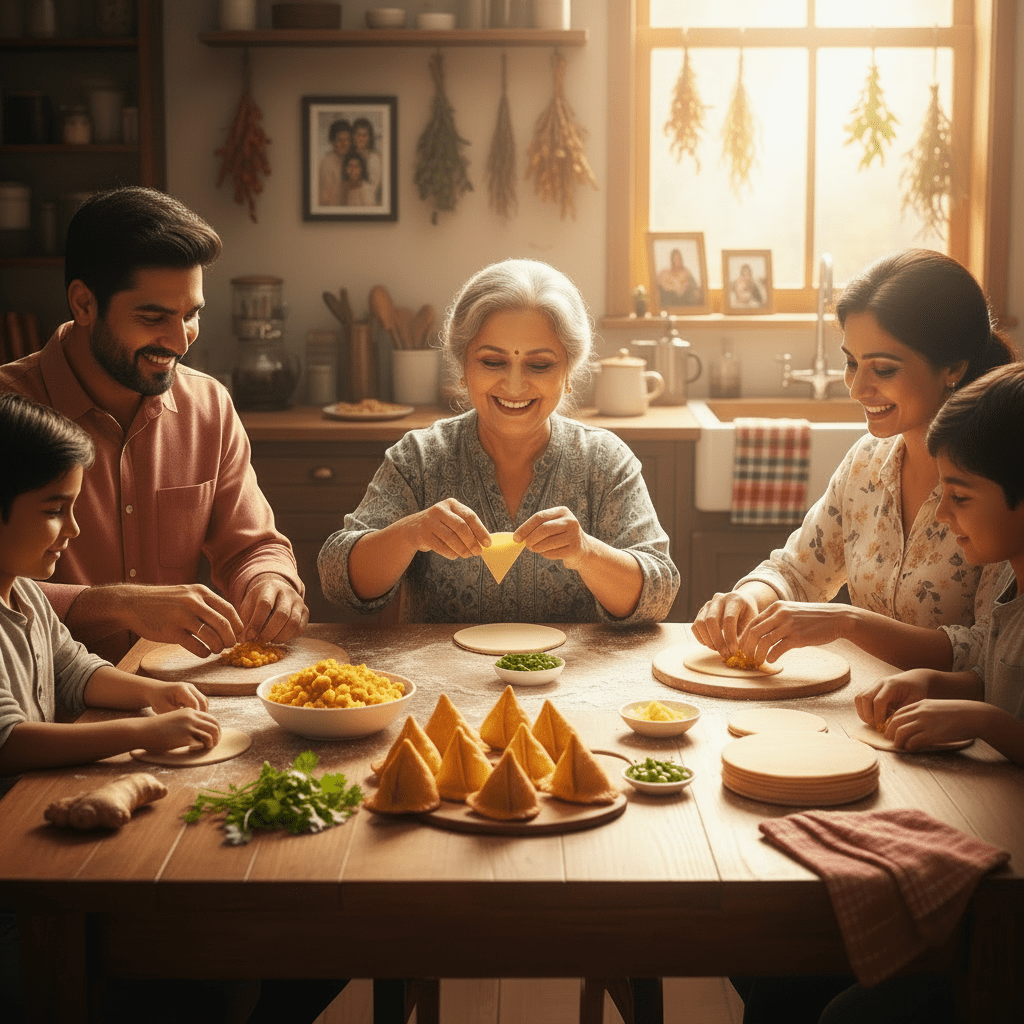
Few snacks capture the heart of Indian cuisine the way a classic samosa does. Crispy on the outside, soft and flavourful on the inside, it’s a perfect balance of texture, spice, and comfort. But beyond being a beloved street food, the humble samosa also carries a surprising amount of wisdom about family, relationships, and life itself. Let’s start with the recipe—and end with the metaphor.
How to Make a Traditional Indian Samosa
A samosa begins with a simple idea: a spiced potato-pea filling wrapped in a thin, crisp dough. But as every home cook knows, the magic lies in the details.
Ingredients for Classic Potato Samosa
For the Dough
- 2 cups all-purpose flour (maida)
- 4 tbsp oil or ghee
- ½ tsp salt
- Water (enough to knead into a firm dough)
For the Filling
- 3–4 medium boiled potatoes (mashed or cubed)
- ½ cup boiled green peas
- 1–2 green chilies, finely chopped
- 1 tsp grated ginger
- 1 tsp cumin seeds
- 1 tsp coriander powder
- ½ tsp garam masala
- ½ tsp red chili powder
- ½ tsp turmeric powder
- 1 tsp amchur (dry mango powder) or lemon juice (optional)
- Salt to taste
- Fresh coriander leaves (optional)
Step-by-Step Preparation
1. Make the Dough
- Mix flour, salt, and oil/ghee until crumbly.
- Add water gradually and knead into a firm dough.
- Cover with a damp cloth and let it rest for 30 minutes.
2. Prepare the Filling
- Heat oil in a pan, add cumin seeds.
- Add ginger, green chilies, and peas; sauté briefly.
- Add mashed potatoes and all spices (coriander, garam masala, chili powder, turmeric).
- Mix well and cook for 2–3 minutes. Let it cool.
3. Shape the Samosas
- Divide the dough into small balls and roll each into an oval.
- Cut each oval in half, form a cone, and fill with the potato mixture.
- Seal the edges with water.
4. Fry
- Heat oil in a deep pan.
- Fry the samosas on medium heat until golden and crisp.
- Drain on paper towels.
Serving Suggestions
- Serve hot with mint or tamarind chutney.
- Pair with masala chai for a true street-style experience.
Tips
- Firm dough ensures crispy shells; too soft will make them oily.
- Fry on medium heat—too hot burns the outside, too low makes them soggy.
The Samosa as a Family Metaphor
Food nourishes the body, but sometimes it also nourishes the mind. The samosa, in its simple structure, mirrors the dynamics of a family beautifully.
1. The Dough – Foundation of Values
Just as the dough forms the outer shell of a samosa, a family’s values and traditions create the protective layer that holds everyone together. If the dough is too soft, the samosa breaks apart; if too hard, it becomes difficult to enjoy. Similarly, if family values are too rigid, members feel suffocated, and if too loose, bonds weaken. Balance is essential.
2. The Filling — Emotions and Personalities
Inside the samosa lies a blend of ingredients, each with its own purpose:
- Potatoes — warmth and stability, like parental love
- Chili — fire, representing anger or passion
- Salt — humour and laughter
- Turmeric — healing and comfort
When blended well, these ingredients create harmony. But if one spice overwhelms the others, the filling loses balance. In families too, emotions must be respected and balanced so that no single mood dominates.
3. The Stuffing — Cooperation and Care
A samosa only tastes good if the filling is carefully stuffed inside the dough. If it’s uneven or poorly measured, the samosa bursts or feels empty. In the same way, family life requires cooperation. Each member must contribute their share of patience, kindness, and support. Without this careful “stuffing,” relationships feel hollow.
4. The Frying – Challenges of Life
Samosas are fried in hot oil, which can be seen as the trials and challenges of life. The heat tests the dough and filling, but if they are well-prepared, the samosa emerges golden and delicious. Families too face difficulties—financial struggles, disagreements, or external pressures. If they stand united, they come out stronger, just like a perfectly fried samosa.
5. The Taste — Joy of Togetherness
The final bite brings everything together.
The joy comes not from one ingredient, but from the harmony of all. A family’s happiness works the same way—shared experiences, ups and downs, and the blend of emotions create something truly fulfilling.
Closing Thought
A samosa teaches us that diversity of ingredients creates richness of flavour. A family thrives when different emotions—anger, laughter, sadness, joy—are embraced and balanced. Cooperation is the secret spice that binds everything together, turning ordinary moments into something golden.

 MixCraft
Leave a comment