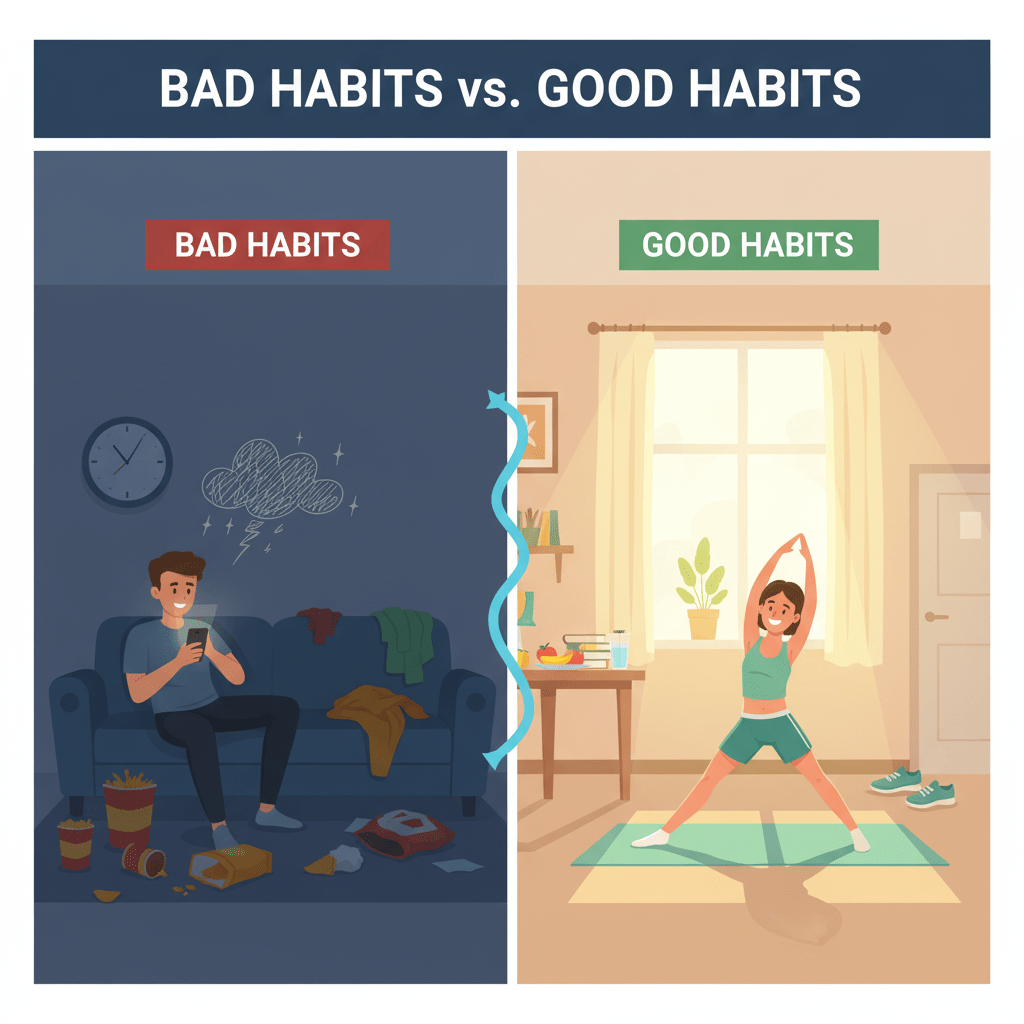
Habits differ from person to person. Some habits lift us up, while others slowly pull us down. Understanding the difference between good and bad habits is one of the most important steps toward living a meaningful, healthy, and successful life.
Good Habits: The Foundation of Growth
A good habit is anything that makes you feel happy, relaxed, and satisfied. If a habit brings peace to your mind and strength to your character, keep doing it.
Sometimes, the habits you practise every day can even become your profession. When you turn your passion into your work, you naturally rise to the top. But this journey requires patience, dedication, determination, consistency, and sincerity.
As you grow, some negative or discouraging people may try to pull you down. Stay focused. Ignore unnecessary distractions. Your goals are more important than their opinions.
People may throw stones at you. Don’t throw them back. Collect them and build an empire.
No one has the right to judge you, because no one truly knows what you’ve been through. People may hear parts of your story, but they don’t know the sleepless nights, the silent pain, or the strength it took to keep going.
We are all created with a purpose. To fulfil that purpose, we must develop habits that support our dreams, our well‑being, our families, our work, and our community.
And remember don’t talk too much like a parrot. A parrot talks a lot but cannot fly high. Be like an eagle—silent, focused, and strong enough to touch the sky.
Bad Habits: Silent Destroyers
Bad habits damage not only our health but also our peace of mind. They affect our relationships, our productivity, and the people around us.
Once we fall into bad habits, we often continue until everything begins to fall apart. That’s why it’s important to pause and ask yourself:
“Am I doing the right thing? Am I hurting myself or others?”
You can also ask trusted friends or family members for honest advice.
If you realise, you’re not on the right path, try to stop. Don’t make excuses. You don’t need to quit instantly — you can quit gradually.
Example: Reducing Junk Food
If you think you’re eating too much junk food, reflect honestly.
Ask yourself: “What do I need to do to stay healthy?”
If you eat fast food 7 or 8 times a month, reduce it to 4 or 5.
Then reduce it to 2 or 3.
Eventually, make it only once a month.
At the same time:
- eat more fruits and vegetables
- drink plenty of water
- sleep well
- exercise regularly
After a few weeks, you’ll notice a healthier, stronger version of yourself.
Life is short. Don’t complicate it. Use your time wisely.
Examples of Good Habits
Good habits help us stay healthy, organised, and successful.
- eating vegetables every day
- exercising regularly
- waking up early
- saving money
- planning your week
- reading before bed
- being punctual
- helping others
- keeping your room tidy
- practising English daily
Examples of Bad Habits
Bad habits create problems for our health, relationships, and productivity.
- staying up too late
- biting your nails
- spending too much time on your phone
- skipping breakfast
- arriving late
- interrupting people
- procrastinating
- eating too much junk food
- smoking
- forgetting to exercise
Useful Vocabulary for Talking About Habits
🔹 Verbs
- have a habit
- develop a habit
- break a habit
- give up a habit
- stick to a habit
- fall into a habit
- get rid of a habit
- build a habit
🔹 Adjectives
- healthy / unhealthy
- good / bad
- productive / unproductive
- helpful / harmful
- daily / weekly / regular
🔹 Nouns
- routine
- lifestyle
- pattern
- behaviour
- addiction
- discipline
Habits with Adverbs
Adverbs help describe how often or how strongly someone does a habit.
Frequency Adverbs
- always
- usually
- often
- sometimes
- rarely
- hardly ever
- never
Examples:
- I always brush my teeth before bed.
- She usually eats a healthy breakfast.
- They often forget to lock the door.
- He rarely exercises.
- I never smoke.
Full Sentence Examples
Good Habits
- I always start my day by drinking water.
- She usually plans her tasks the night before.
- They often help their classmates.
- He regularly practises English with his friends.
Bad Habits
- I sometimes waste too much time on YouTube.
- She often forgets to do her homework.
- He rarely eats vegetables.
- They never clean their desks.

 MixCraft
Leave a comment