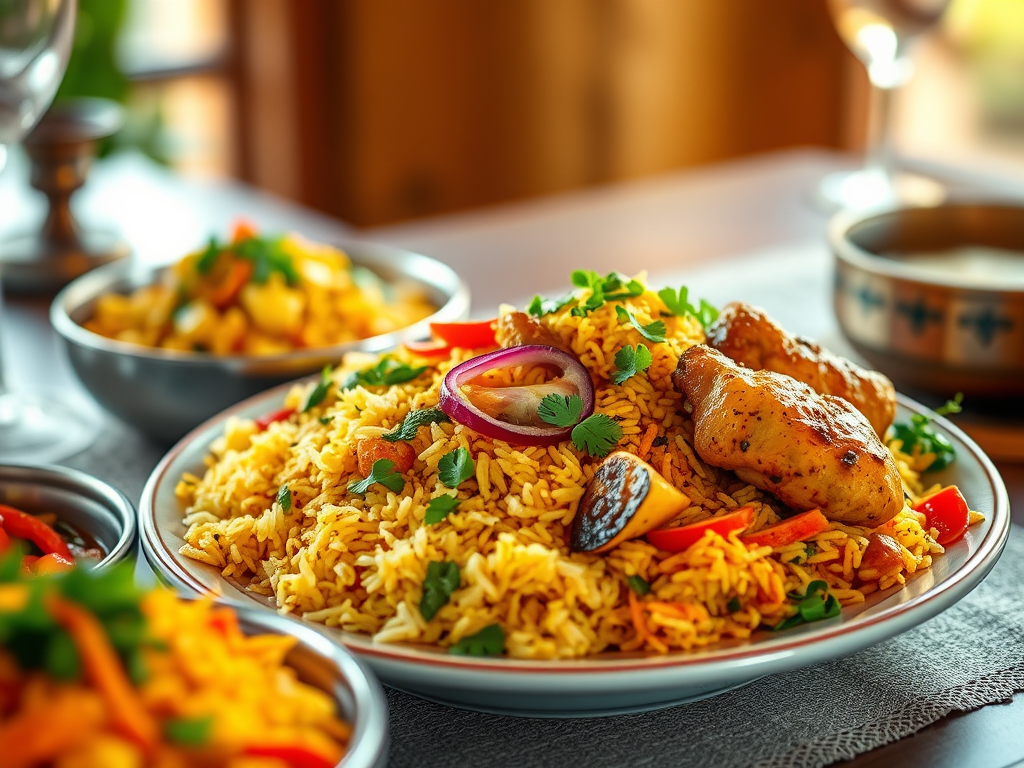
Few dishes bring together aroma, colour, and comfort the way biryani does. Whether you’re preparing a wholesome vegetable biryani or a rich, flavour‑packed chicken biryani, the process is as rewarding as the first bite. Below are two beautifully structured recipes followed by a thoughtful reflection on how biryani mirrors teamwork in everyday life.
Vegetable Biryani
Ingredients
| Item | Quantity |
| Basmati rice | 2 cups (soaked 30 min) |
| Mixed vegetables (carrot, beans, peas, cauliflower, potato) | 2 cups |
| Yogurt | ½ cup |
| Onions | 3 large, sliced |
| Tomatoes | 2 medium, chopped |
| Ginger-garlic paste | 2 tbsp |
| Whole spices | 2 bay leaves, 4 cloves, 4 cardamoms, 1 cinnamon stick |
| Powdered spices | 1 tsp turmeric, 2 tsp chili powder, 2 tsp garam masala |
| Fresh herbs | ½ cup mint, ½ cup coriander |
| Milk + saffron | ½ cup |
| Oil/Ghee | 4 tbsp |
| Salt | To taste |
Steps
1. Cook the Rice
Rinse the rice and boil it in plenty of water with salt and whole spices like bay leaf, cloves, and cardamom. Cook until the grains are about 70% done—firm in the centre. Drain immediately to stop further cooking.
2. Fry the Onions
Heat oil or ghee and fry thinly sliced onions on medium heat until they turn golden brown. Remove them and keep half aside for garnishing later.
3. Cook the Masala
In a pan, sauté ginger‑garlic paste until fragrant. Add chopped tomatoes and cook until soft. Mix in the powdered spices and yogurt, then add the vegetables. Cook until the vegetables are tender and the masala thickens.
4. Layering
In a heavy pot, spread a layer of rice, then add a layer of masala. Sprinkle fresh herbs, fried onions, and a drizzle of saffron‑infused milk. Repeat the layers until everything is used, finishing with rice on top.
5. Dum Cooking
Seal the pot tightly with a lid (or foil) and cook on very low heat for about 20 minutes so the flavours blend and the rice finishes steaming.
6. Serve
Let it rest for a few minutes, then gently fluff the rice without breaking the grains. Serve hot with raita.
Chicken Biryani
Ingredients
| Item | Quantity |
| Basmati rice | 2 cups (soaked 30 min) |
| Chicken | 500g (marinated) |
| Yogurt | 1 cup |
| Onions | 3 large, sliced |
| Tomatoes | 2 medium, chopped |
| Ginger-garlic paste | 2 tbsp |
| Whole spices | 2 bay leaves, 4 cloves, 4 cardamoms, 1 cinnamon stick |
| Powdered spices | 1 tsp turmeric, 2 tsp chili powder, 2 tsp garam masala |
| Fresh herbs | ½ cup mint, ½ cup coriander |
| Milk + saffron | ½ cup |
| Oil/Ghee | 4 tbsp |
| Salt | To taste |
Steps
1. Marinate the Chicken
Combine the chicken with yogurt, turmeric, chili powder, ginger‑garlic paste, and salt. Mix well so every piece is coated. Let it rest for about 30 minutes to absorb the flavours.
2. Cook the Rice
Boil water with salt and whole spices like bay leaf, cloves, and cardamom. Add the rice and cook until it reaches about 70% doneness—firm in the centre. Drain and set aside.
3. Fry the Onions
Heat oil or ghee and fry thinly sliced onions on medium heat until they turn golden brown and crisp. Remove them and keep half aside for garnishing later.
4. Cook the Masala
In a pan, sauté ginger‑garlic paste until fragrant. Add chopped tomatoes and cook until soft. Stir in the powdered spices, then add the marinated chicken. Cook until the chicken becomes tender and the masala thickens.
5. Layering
In a heavy pot, start with a layer of rice. Add a layer of chicken masala, sprinkle fresh herbs, add fried onions, and drizzle saffron‑infused milk. Repeat the layers, finishing with rice on top.
6. Dum Cooking
Seal the pot tightly using a lid. For a traditional dum effect, you can seal the edges with dough or cover with foil before placing the lid. Cook on very low heat for 20–25 minutes. This slow cooking allows the flavours to blend and the rice to finish steaming without burning.
7. Serve
Let it rest briefly, then gently fluff the rice without breaking the grains. Serve hot with raita or a fresh salad.
Tips
- Always use aged basmati rice for long, fluffy grains.
- For authentic aroma, add a splash of rose water or kewra water before sealing.
- Balance spice and richness—biryani should be fragrant, not overpowering.
Biryani as teamwork metaphor
Making biryani is like building teamwork in any field—education, business, healthcare, or sports. Rice forms the foundation, just as the core members of a team provide stability and structure. Spices add flavour, just as diverse skills and perspectives add creativity and innovation. Chicken or vegetables are the highlight, like specialists or leaders who carry key responsibilities. Garnishes such as fried onions and saffron lift the dish, just as encouragement, recognition, and support lift morale in any workplace or group.
The cooking process also mirrors how teamwork develops. Soaking rice is like preparing the team with training, marinating chicken is like equipping specialists with expertise, and layering rice with masala is like coordinating roles across departments. Dum cooking—slow, patient steaming—represents collaboration, trust, and bonding, where individual strengths blend into harmony. Finally, serving biryani is like delivering results: the preparation, patience, and teamwork come together in one successful performance, whether it’s a project, a lesson, a medical procedure, or a match.

 MixCraft
Leave a comment